A Houthi Missile Hits a Greek-Flagged Tanker. The Yemen War Was Not Over.
The Sounion II, fully laden with Saudi crude bound for Rotterdam, was struck Friday morning in the Bab el-Mandeb strait by an Iranian-supplied anti-ship cruise missile, the first significant attack on commercial shipping in the corridor since the November 2025 ceasefire and a deliberate signal from Sanaa that the Iran war's southern front has been reactivated in response to the U.S. blockade of Iranian ports.
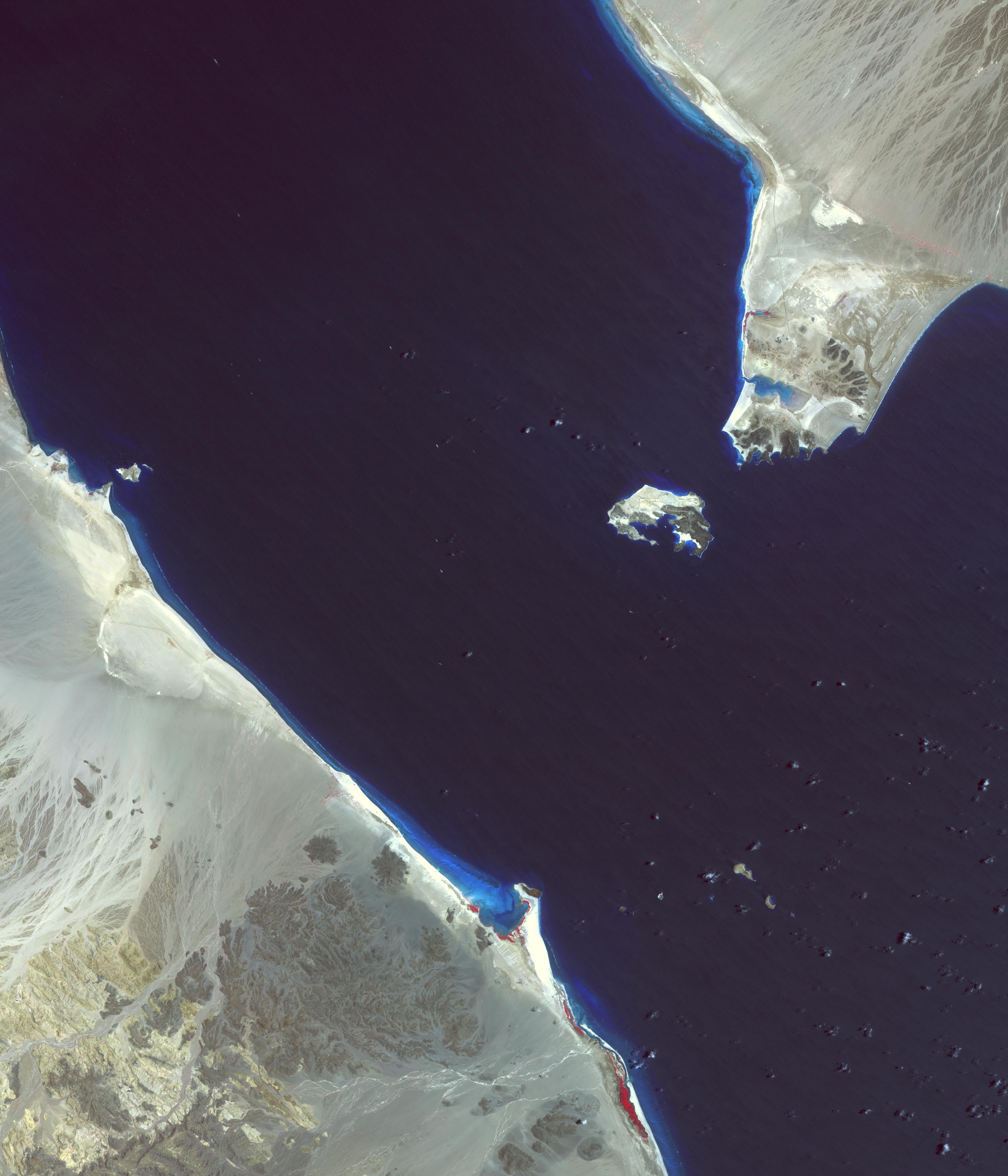
A Houthi anti-ship cruise missile struck the Greek-flagged tanker Sounion II in the Bab el-Mandeb strait at approximately 0540 local time Friday morning, U.S. Central Command confirmed in a statement issued early Friday afternoon. The vessel, which was fully laden with approximately 1.2 million barrels of Arab Light crude bound for refineries in Rotterdam, took the impact on the starboard side near the bow, suffered no casualties among the crew, and is currently burning under Greek-flagged tug while being towed toward Djibouti for damage assessment. Initial reports indicate the cargo is intact and no oil has spilled into the strait, with the fire contained to forward ballast spaces that were not carrying crude at the time of the strike. Centcom's preliminary assessment, released approximately six hours after the impact, identified the weapon as a Sayyad-2C, the Iranian-supplied anti-ship cruise missile that the Houthis used extensively during the 2024-2025 Red Sea campaign and that requires targeting data that the Houthis cannot generate independently of Iranian intelligence support.
The strike is the first significant attack on commercial shipping in the Bab el-Mandeb since the November 2025 ceasefire that ended the eighteen-month Houthi campaign against Red Sea traffic, and the political framing accompanying it is, by design, more important than the operational specifics of the attack itself. The Houthi political bureau issued a statement Friday afternoon claiming responsibility and explicitly tying the strike to the U.S. naval blockade of Iranian ports, framing the attack as "support for the Iranian people resisting American aggression" and warning of "additional measures" if the blockade continues. This framing is significant because it represents a deliberate redefinition of the Houthi rationale for attacking Red Sea shipping. During the 2024 campaign, Houthi attacks were framed as solidarity with Gaza, and the Gaza ceasefire of late 2024 was a precondition for the November 2025 truce that ended the Red Sea attacks. Friday's strike establishes a new and more dangerous predicate: the Houthis are now attacking commercial shipping in retaliation for actions taken against Iran, which establishes the Persian Gulf and the Red Sea as linked targets in a single Iran-aligned strategy and which therefore requires American naval forces, already stretched by Hormuz blockade duty, to also reinforce the Red Sea corridor.
The intelligence question of whether the Houthis acted under specific Iranian direction or whether the strike represents Houthi initiative within a broader Iranian framework will occupy intelligence services for some time and is not, in operational terms, the question that matters most. The Houthi political bureau is autonomous in many respects but materially dependent on Iranian-supplied weapons and Iranian-supplied intelligence, and a Sayyad-2C launch against a moving tanker requires real-time targeting data that the Houthis do not generate from their own assets. They obtain it from Iran. Whether Tehran issued an order or merely declined to prevent the strike is a distinction that will matter to historians and that will not matter to American policymakers, who will treat the attack as Iranian-directed unless they receive convincing evidence otherwise. The Iranian foreign ministry's predictable Friday-evening statement that the Houthis "act according to their own assessments" is the standard Iranian formulation for plausible deniability and is unlikely to alter the American assessment.
The timing is awkward for the Iranian negotiating position now being constructed through the Omani channel, with Foreign Minister Araghchi in Muscat since last Saturday reviewing Sultan Haitham's invitation to a third round of indirect talks, and the strike functioning either as a signal that Iran is not interested in those talks or as evidence that Iran cannot fully control the proxies whose behavior any plausible diplomatic settlement would have to address, neither of which improves Tehran's negotiating leverage. American negotiators, who have been calibrating their approach to give the Iranian side political space on the harder questions, will now have to factor a Houthi strike into whatever they propose, and any proposal will inevitably require explicit Iranian commitments to constrain Houthi behavior that Tehran has spent the past decade insisting it does not direct, a contradiction Iranian diplomats have managed before but one that becomes harder to manage each time the proxies act in ways that complicate their host's diplomatic position.
The market reaction was immediate, with Brent crude, which had been drifting back below $108 on Wednesday's UN vote dynamics, jumping 4 percent on the Friday news to $112. Insurance premiums for tankers transiting the Red Sea, which had returned to roughly $35,000 per voyage after the November ceasefire, are now expected to spike toward the $400,000 levels that prevailed during the worst weeks of the 2024 campaign. The container shipping companies that spent six months unwinding their Cape of Good Hope reroutings will now have to consider re-rerouting, with Maersk releasing a statement late Friday saying it was "evaluating routing options" for vessels currently in transit and CMA CGM, Hapag-Lloyd, and MSC expected to follow over the weekend. Each rerouting adds roughly twelve days of voyage time, between $750,000 and $1 million in additional fuel costs per voyage, and the kind of supply chain disruption that European retailers had thought they had escaped six months ago.
The administration is now under pressure to respond, with the obvious response being a repeat of the Operation Poseidon Archer pattern of 2024, when Centcom conducted retaliatory strikes against Houthi launch sites in the Hodeidah governorate and along the Red Sea coast. The historical record on whether such strikes deter Houthi behavior is unflattering: the 2024 strikes did not stop the attacks until the November ceasefire was negotiated, and the November ceasefire required Iranian acquiescence that is unlikely to be repeated under current conditions. The expectation among defense officials I spoke with this afternoon is that Centcom will conduct retaliatory strikes within 72 hours, that the strikes will produce some operational disruption to Houthi capability, and that they will not durably reduce the Houthi willingness to attack shipping while the broader Iran standoff continues. The longer-term question is whether the Houthi front becomes a sustained second theater of the Iran war or remains a one-off escalatory message that recedes into the background once the Hormuz situation produces some kind of resolution. The answer depends on what Tehran tells the Houthis to do next and on what Washington decides about Sultan Haitham's invitation, with the two questions now bound together more tightly than they were a week ago.
Related Stories

The Tariff Truce Expires in October. Bessent Is Going to Beijing.
Treasury Secretary Scott Bessent will travel to Beijing in early June for working-level meetings on the trade truce, in the first cabinet-level American visit since the Iran war began.
May 18, 2026 · 7 min read

Netanyahu Convenes Security Cabinet After Muscat Collapse
Prime Minister Benjamin Netanyahu convened an emergency session of Israel's Security Cabinet on Saturday morning hours after Muscat Round 3 ended without agreement, in a meeting Israeli officials described as a review of military options.
May 16, 2026 · 6 min read

Chinese Foreign Minister Arrives in Tehran on Unannounced Visit
Chinese Foreign Minister Wang Yi arrived in Tehran on Tuesday morning unannounced, the first cabinet-level Chinese visit to Iran since the U.S. naval blockade began on April 12.
May 12, 2026 · 6 min read