The Pentagon Wants $30 Billion for the Defense Production Act. The Iran War Showed Why.
A 100-fold increase in DPA spending signals a fundamental shift in how Washington thinks about the defense industrial base. The munitions burn rate in Iran has exposed gaps that peacetime procurement cannot close.
The Pentagon's fiscal year 2027 budget requests $30 billion for Defense Production Act purchases. That is a nearly 100-fold increase over recent spending levels. The discretionary request is $477 million. The remaining $29.9 billion comes through mandatory funding via reconciliation, InsideDefense reported.
The number is not a typo. It is a signal that the Iran war has changed how the Pentagon thinks about industrial capacity, and that the change is not temporary.
What the War Revealed
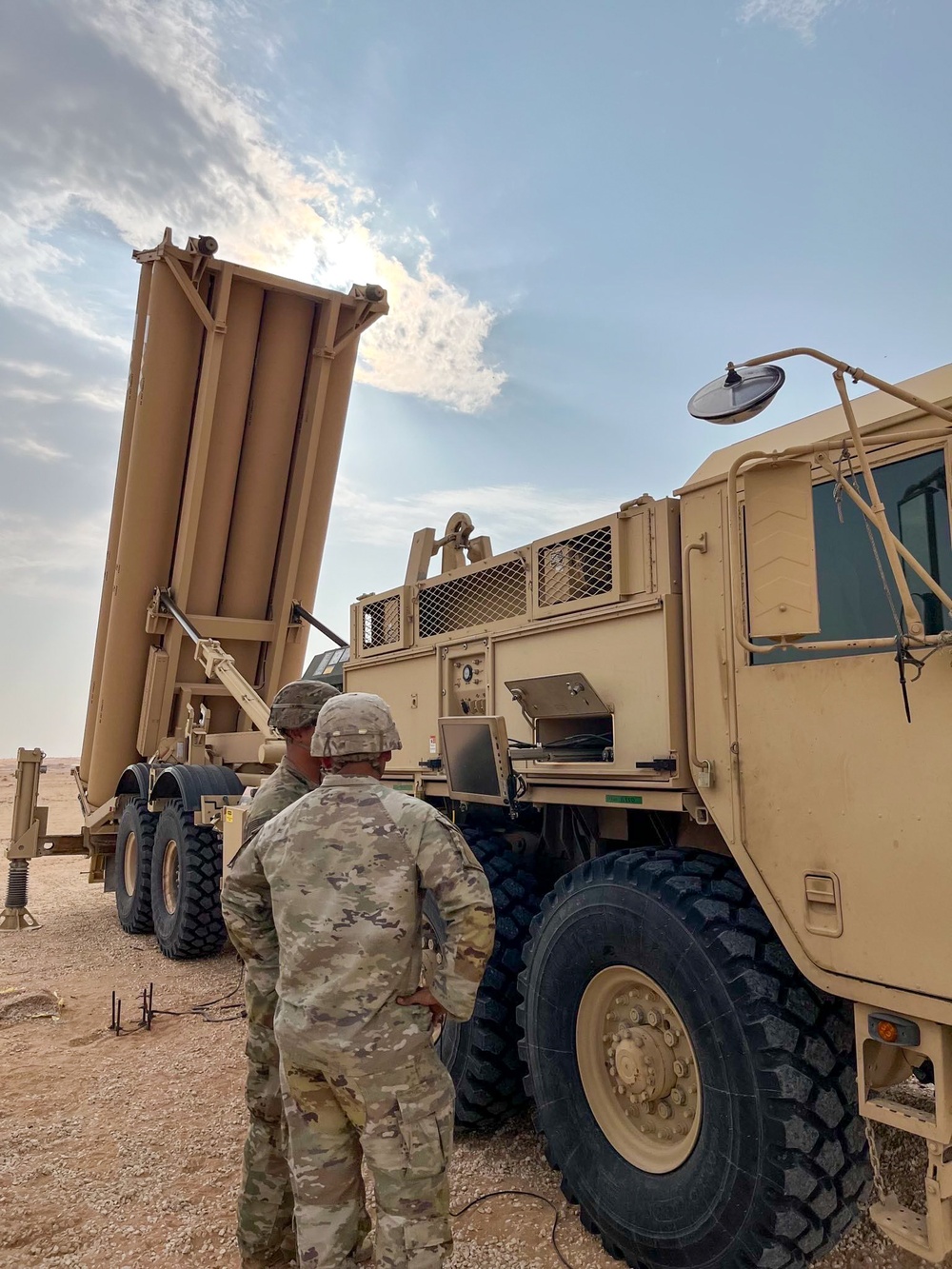
Six weeks of air operations against Iran have consumed munitions at a rate that has strained production lines across the defense industrial base. Tomahawk cruise missiles cost roughly $2 million each. JASSM-ERs run about $1.5 million. Thousands of both have been expended. Patriot interceptors, which cost $4 million per round, have been fired at Iranian ballistic missiles targeting U.S. bases in Saudi Arabia and the UAE. The THAAD system, deployed to defend against the longer-range threats demonstrated by the Diego Garcia attack, fires interceptors that cost approximately $12 million each.
The defense industrial base was not built to replace these weapons at the rate they are being used. Lockheed Martin produces approximately 500 Patriot interceptors per year. Raytheon produces roughly 400 Tomahawks annually. At the consumption rates of the Iran campaign, current production covers weeks of conflict, not months.
Ukraine exposed this problem. Iran made it impossible to ignore. The United States is fighting one regional war and deterring two near-peer adversaries (Russia and China) simultaneously. The arithmetic does not work at current production capacity.
What DPA Money Buys
The Defense Production Act, signed by Harry Truman in 1950 during the Korean War, gives the president authority to direct private industry to prioritize defense contracts, expand production capacity, and develop critical materials. It has been used sparingly in recent decades, mostly for targeted investments in specific supply chain vulnerabilities.
A $30 billion DPA request transforms the tool from a niche authority into a major industrial policy lever. The money would fund expanded production lines for precision munitions, missile defense interceptors, and the critical components (solid rocket motors, guidance systems, microelectronics) that bottleneck production across multiple weapons programs.
The Pentagon's budget documents show the spending divided between direct production contracts and investments in manufacturing infrastructure: new factory lines, workforce training, and supplier development. The goal, according to defense officials quoted by InsideDefense, is to build the capacity to sustain a prolonged conflict while simultaneously maintaining deterrence commitments in Europe and the Indo-Pacific.
The Reconciliation Question
The $30 billion request relies heavily on mandatory funding through reconciliation rather than annual appropriations. Of the total, $29.9 billion is mandatory. Only $477 million flows through the normal discretionary budget process.
This structure mirrors the Golden Dome missile defense request: use reconciliation to lock in multi-year funding that future Congresses cannot easily redirect. The administration has concluded that the defense industrial base cannot be rebuilt through annual budget cycles that shift priorities with every election.
The approach has merit. Building a new Tomahawk production line takes years. Training the machinists who operate it takes months. These investments require long-term certainty that annual appropriations do not provide. Every defense industrial base study of the past decade has identified funding instability as the primary barrier to capacity expansion.
The challenge is congressional. Republicans hold narrow majorities in both chambers. Reconciliation requires party-line votes. Fiscal conservatives who balk at the deficit implications may resist a $30 billion mandatory spending increase even for defense. The administration is betting that the Iran war has made the political argument for industrial base expansion self-evident.
The Larger Context
The United States last mobilized its industrial base for sustained conflict during the Cold War. Since then, the defense industry has consolidated from dozens of major contractors to five primes (Lockheed Martin, Raytheon, Boeing, Northrop Grumman, General Dynamics). Production lines have been optimized for peacetime efficiency, not wartime surge. Skilled workers have aged out without replacements. Sub-tier suppliers have closed or moved offshore.
The Iran war did not create these problems. It revealed them under stress. A $30 billion DPA investment is the first serious attempt to address the underlying capacity constraints that decades of peacetime budgeting have produced.
Whether $30 billion is enough depends on assumptions about future conflict. If the Iran war ends quickly and the United States faces no additional contingencies, current capacity is adequate for restocking. If the security environment continues to deteriorate, with Russia in Ukraine, China building toward Taiwan contingencies, North Korea expanding its missile arsenal, and Iran potentially requiring a return engagement, then $30 billion is a down payment, not a solution.
The Pentagon's request reflects a judgment that the second scenario is more likely. The defense industrial base needs to be rebuilt for a world where the United States may fight and deter simultaneously, across multiple theaters, for an extended period. The Iran war made the case. The $30 billion is the first installment on the response.
Related Stories

Muscat Round 3 Ends Without Framework Agreement
The third round of indirect U.S.-Iran talks ended in Muscat on Friday morning without the framework agreement Witkoff had been seeking. The Iranian delegation departed for Tehran.
May 15, 2026 · 5 min read

U.S. Destroyer Confronts Iranian Fast Boats in Hormuz
The USS Truxtun drove off four Iranian fast boats approaching a Liberian-flagged tanker in the central Strait on Saturday, in the most serious non-kinetic confrontation since the blockade began.
May 9, 2026 · 6 min read

Witkoff Is in Muscat for the Third Round of Iran Talks
Special Envoy Steve Witkoff arrived in Muscat on Sunday morning aboard a commercial Emirates flight from Dubai, joining Iranian Foreign Minister Abbas Araghchi in a city where the Sultan's protocol forbids public confirmation of negotiations until both sides authorize disclosure, and where the substantive work of the third round of indirect U.S.-Iran talks has now begun under conditions that neither government would publicly acknowledge for several days.
May 4, 2026 · 7 min read