Navy's 30-Year Shipbuilding Plan Confronts Industrial Base Reality
The Pentagon wants a 367-ship fleet. America's shipyards can barely maintain the 289 ships it has now.
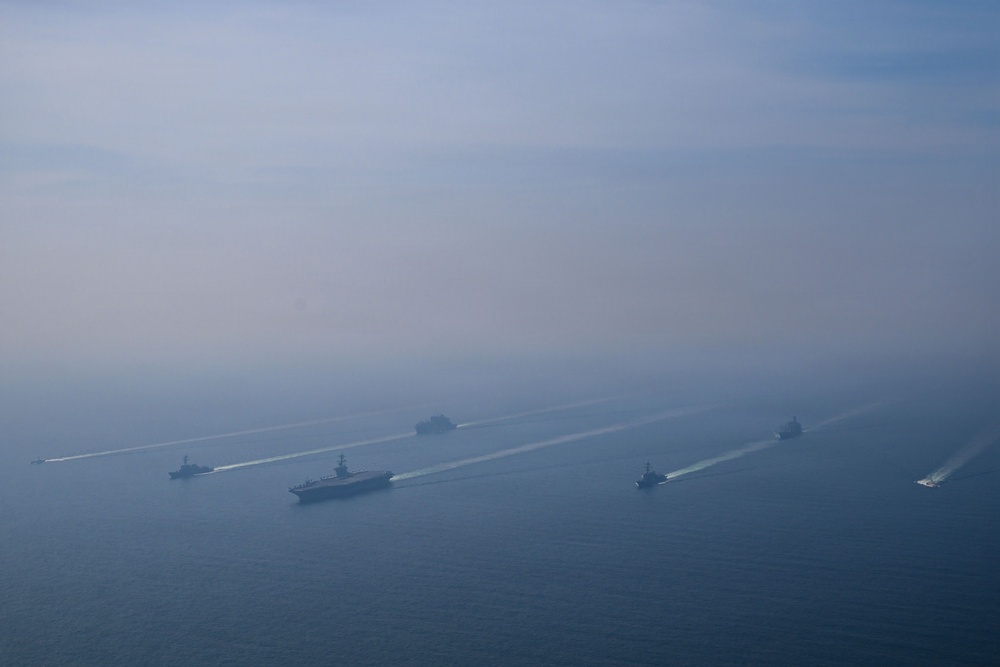
The Department of the Navy's latest 30-year shipbuilding plan, submitted to Congress this month, calls for a fleet of 367 manned vessels by 2054, an ambitious target that defense analysts and industry executives say is disconnected from the capacity of America's shipbuilding industrial base.
The United States currently operates 289 battle force ships. To reach 367, the Navy would need to build an average of 12 to 13 ships per year while decommissioning older vessels on schedule. Current production averages roughly 8 to 9 ships per year, and multiple programs are running behind schedule.
The Capacity Problem
America's military shipbuilding capacity is concentrated in seven major shipyards operated by two companies: Huntington Ingalls Industries and General Dynamics. These yards are running at or near capacity, and workforce shortages are the binding constraint.
The shipbuilding workforce has contracted steadily since the end of the Cold War. The industry employed approximately 180,000 workers in the late 1980s; today, the number is closer to 95,000. Training a skilled shipbuilder (a welder, pipe fitter, or electrician qualified to work on nuclear-powered vessels) takes three to five years.
"You cannot surge a workforce that took 30 years to atrophy," said one senior defense industry executive who spoke on condition of anonymity to discuss sensitive planning assumptions. "You can appropriate the money tomorrow. You cannot appropriate the people."
Submarine Bottleneck
The most acute pressure point is the submarine industrial base. The Navy's plan calls for maintaining production of two Virginia-class attack submarines per year while simultaneously building Columbia-class ballistic missile submarines, the replacement for the aging Ohio class that carries roughly 70 percent of America's nuclear deterrent.
Both programs share key suppliers and, critically, compete for the same specialized workers. The result is a production schedule that the Government Accountability Office has repeatedly flagged as unrealistic. Virginia-class boats are currently being delivered 12 to 18 months late, and the Columbia program has limited margin for further delays.
Strategic Implications
The shipbuilding gap is not merely a procurement inconvenience. It is a strategic vulnerability.
China's naval shipbuilding capacity now exceeds America's by a factor of roughly 200 to 1 in terms of gross tonnage produced per year, according to a widely cited estimate from the Office of Naval Intelligence. While the comparison is imperfect (Chinese yards primarily build commercial vessels and smaller combatants), the underlying industrial capacity is real and, in a protracted conflict, could prove decisive.
The Pentagon's plan acknowledges these constraints but offers few concrete solutions beyond requesting additional funding for shipyard modernization. The real question is whether the United States is willing to make the long-term investments (in workforce development, shipyard infrastructure, and supply chain resilience) that a 367-ship navy would require.
Based on current trajectories, the honest answer is: probably not.
Related Stories

Muscat Round 3 Ends Without Framework Agreement
The third round of indirect U.S.-Iran talks ended in Muscat on Friday morning without the framework agreement Witkoff had been seeking. The Iranian delegation departed for Tehran.
May 15, 2026 · 5 min read

U.S. Destroyer Confronts Iranian Fast Boats in Hormuz
The USS Truxtun drove off four Iranian fast boats approaching a Liberian-flagged tanker in the central Strait on Saturday, in the most serious non-kinetic confrontation since the blockade began.
May 9, 2026 · 6 min read

Witkoff Is in Muscat for the Third Round of Iran Talks
Special Envoy Steve Witkoff arrived in Muscat on Sunday morning aboard a commercial Emirates flight from Dubai, joining Iranian Foreign Minister Abbas Araghchi in a city where the Sultan's protocol forbids public confirmation of negotiations until both sides authorize disclosure, and where the substantive work of the third round of indirect U.S.-Iran talks has now begun under conditions that neither government would publicly acknowledge for several days.
May 4, 2026 · 7 min read