NATO Allies Hit 2% for the First Time. Now Comes the Hard Part.
The alliance's latest annual report shows real progress on defense spending, with European allies and Canada boosting budgets by 20 percent. But the 5% target agreed at The Hague remains a long way off, and dollars alone do not equal deterrence.
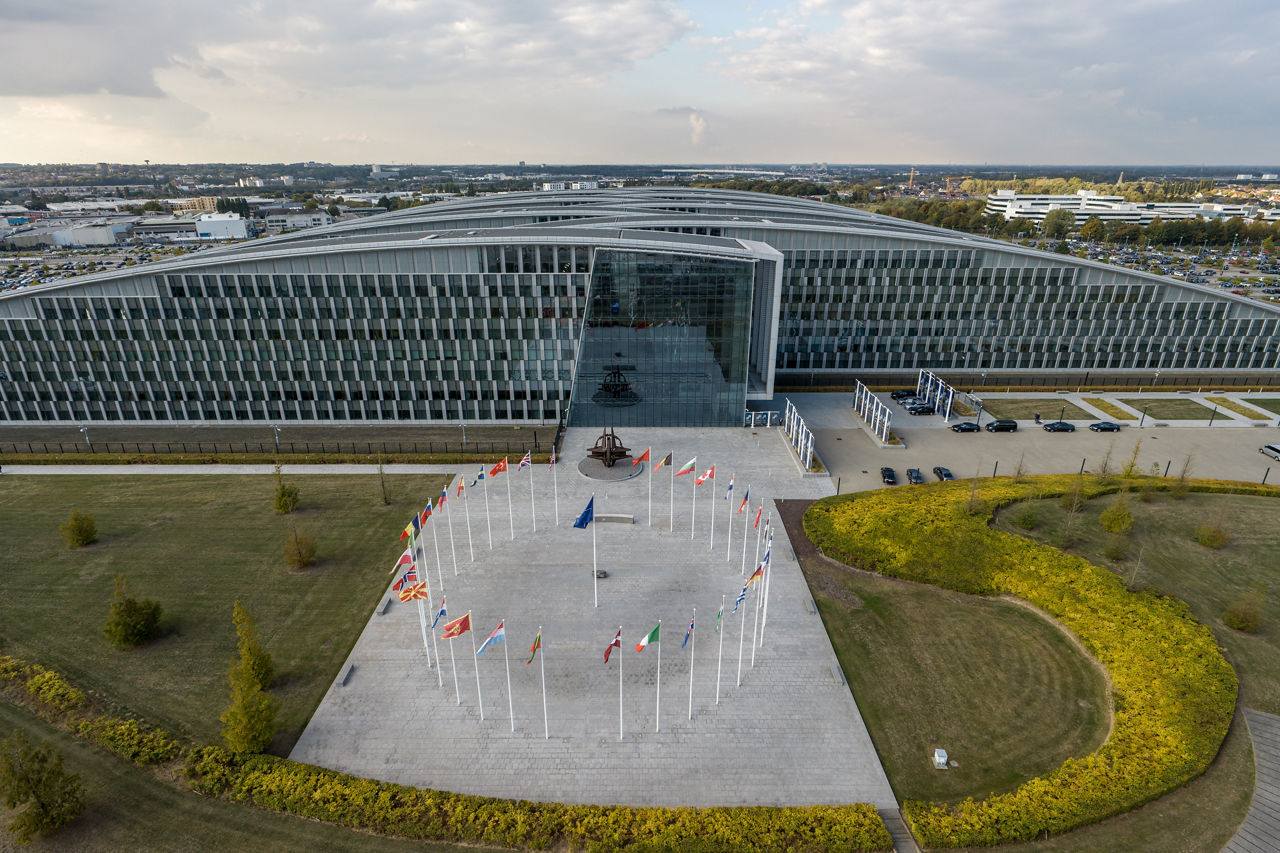
The countries that spend the most on defense in NATO are the ones whose eastern borders are measured in hours of tank travel from Russian staging areas. Poland, 4.48 percent of GDP. Lithuania, 4 percent. Latvia, 3.73 percent. Estonia, 3.4 percent. When the Suwalki Gap is your backyard and the Pskov Airborne Division is on the other side of it, the incentive structure clarifies itself.
NATO Secretary General Mark Rutte announced Wednesday that all 32 member states met or exceeded the 2 percent threshold for the first time since the pledge was made at Wales in 2014. European allies and Canada increased spending by 20 percent in real terms over the prior year. The alliance-wide average hit 2.77 percent. Collective spending topped $1.4 trillion, with Europeans and Canadians contributing $574 billion.
The numbers are real. So is the question that follows: can the alliance convert budget lines into the kind of military power that actually deters a peer adversary?
The Geography of Seriousness
Seven nations exceeded 3 percent: Poland, Lithuania, Latvia, Estonia, Denmark, Norway, and the United States. The map tells you everything the spreadsheet does not. Every one of those European countries either borders Russia, borders the Baltic Sea across from Kaliningrad, or sits on NATO's northern flank within striking distance of the Kola Peninsula.
Strip out the American contribution and the picture shifts. The combined European and Canadian average falls to 2.33 percent, above the old floor but a long march from the 5 percent target allies committed to at The Hague last June. That target is structured in two tiers: at least 3.5 percent on core defense and NATO capability targets, with an additional 1.5 percent covering critical infrastructure protection, cyber, civil preparedness, innovation, and the defense industrial base. The Ankara summit in July will be the first test of whether the commitment is serious. If history is any guide, expect creative accounting and generous definitions of "security-related spending."
Rutte credited the Trump administration directly. "Without the present American administration," he said, "the whole of NATO would not have been reaching the 2% at the end of 2025." He added that without American pressure, the 5 percent commitment would never have materialized.
It is a remarkable admission from a sitting Secretary General. It confirms what defense hawks on both sides of the Atlantic have argued for a decade: European allies respond to American pressure, not to Russian armor on their borders. Russia invaded Ukraine in February 2022. It took three more years and sustained American demands for every ally to meet a spending target set in 2014.
The Germany Problem
Spending targets measure inputs. Deterrence requires outputs. The gap between the two is where Germany lives.
Berlin has dramatically increased defense spending since the full-scale invasion of Ukraine. The 100 billion euro special fund in 2022. Steady baseline budget increases since. Germany now meets the 2 percent threshold. Whether the Bundeswehr could fight a peer conflict for more than a few weeks is a question its own generals avoid answering in public.
The Bundeswehr remains plagued by readiness problems, procurement delays, and an acquisition bureaucracy that turns every weapons program into a multi-year obstacle course. Helicopters that cannot fly. Submarines that cannot sail. Infantry fighting vehicles ordered in quantities too small to equip the formations that need them. Germany spends the money. The question is what it gets for it.
The same concern runs across much of Western Europe. France maintains genuine expeditionary capability but is stretched across Africa and the Indo-Pacific. Italy and Spain have raised budgets but still lack the logistics, ammunition stocks, and deployable formations that a serious defense posture on the eastern flank requires. Rutte praised Spain for moving from 1.3 to 2 percent. That is billions extra. It is also true that Spain's military remains configured primarily for peacekeeping and coastal patrol, not high-intensity warfare against a mechanized adversary.
What Actually Deters
The alliance needs to start measuring what matters. Not budget percentages but ammunition stockpiles. Deployable brigade combat teams. Integrated air and missile defense coverage. Naval tonnage. And above all, the industrial capacity to sustain a fight longer than the initial inventory lasts.
Ukraine has demonstrated what modern peer conflict looks like. It consumes materiel at rates that outpace peacetime production by orders of magnitude. Artillery shells, missiles, armored vehicles, drones: the burn rate is staggering. If NATO cannot manufacture replacements faster than a peer adversary can destroy the originals, the spending percentage on a Brussels spreadsheet is academic.
Poland understands this. Warsaw is not merely hitting a budget target. It is building one of the most capable land forces in Europe: K2 tanks from South Korea, M1 Abrams from the United States, HIMARS rocket systems, F-35 fighters. The Baltic states are doing the same at their scale, investing in the specific capabilities (anti-tank systems, air defense, minelaying) that make their terrain expensive to cross.
These are the models. Not Germany's bureaucratic spending, which converts euros into process rather than capability. Not Spain's headline number, which buys institutional maintenance rather than warfighting capacity. But Poland's approach: identify the threat, buy what kills it, train to use it.
What Washington Should Want
The United States has spent two decades asking Europeans to spend more on defense. They are doing it. That deserves acknowledgment. Poland in particular deserves recognition as a country that takes its own defense with a seriousness that shames most of its Western European allies.
But acknowledgment should not become complacency. The 5 percent target is right, and the 2035 timeline is arguably too generous. Russia's defense industry is on a war footing. China's military modernization accelerates. The United States cannot indefinitely guarantee European security while pivoting resources to the Indo-Pacific. European allies need the capacity to hold the eastern flank without assuming American forces will always fill every gap.
The annual report is good news. The trend lines point upward. But trend lines are not capability, and capability is not deterrence. Deterrence requires an adversary to believe that the cost of aggression exceeds the gain. That belief is built on real military power: formations that can deploy, ammunition that exists in quantity, an industrial base that can sustain a fight.
NATO is spending more. The question that Rutte's report cannot answer is whether the alliance is spending well enough, and fast enough, to keep the peace.
Related Stories

Muscat Round 3 Ends Without Framework Agreement
The third round of indirect U.S.-Iran talks ended in Muscat on Friday morning without the framework agreement Witkoff had been seeking. The Iranian delegation departed for Tehran.
May 15, 2026 · 5 min read

U.S. Destroyer Confronts Iranian Fast Boats in Hormuz
The USS Truxtun drove off four Iranian fast boats approaching a Liberian-flagged tanker in the central Strait on Saturday, in the most serious non-kinetic confrontation since the blockade began.
May 9, 2026 · 6 min read

Witkoff Is in Muscat for the Third Round of Iran Talks
Special Envoy Steve Witkoff arrived in Muscat on Sunday morning aboard a commercial Emirates flight from Dubai, joining Iranian Foreign Minister Abbas Araghchi in a city where the Sultan's protocol forbids public confirmation of negotiations until both sides authorize disclosure, and where the substantive work of the third round of indirect U.S.-Iran talks has now begun under conditions that neither government would publicly acknowledge for several days.
May 4, 2026 · 7 min read