Day 29: The Kharg Island Question and the War Without an Exit
As Operation Epic Fury enters its fifth week, the Pentagon is preparing a ground force deployment to seize Iran's oil export hub. The Houthis have opened a new front. Allies are refusing to help. And nobody in Washington can explain how this ends.
Kharg Island sits 15 miles off Iran's southwestern coast, a flat coral formation roughly five miles long and three miles wide, rising barely 30 feet above the Persian Gulf at its highest point. Ninety percent of Iran's crude oil exports flow through its terminals. In the geography of this war, Kharg is the prize that looks obvious from Washington and lethal from closer range.
Four weeks ago, the United States and Israel launched Operation Epic Fury. The opening strike killed Supreme Leader Ali Khamenei. Iran's surface navy was shattered within days. More than 9,000 targets have been hit. By every metric the Pentagon tracks, the campaign has been a tactical masterpiece.
But on Day 29 the war is expanding, not concluding. The Houthis have opened a second front. The Strait of Hormuz remains shut. Casualties are climbing. And the Pentagon is weighing something that should alarm anyone who remembers what happened the last time American paratroopers deployed to the Middle East with no articulated endstate: a ground operation on Kharg Island.
The Butcher's Bill
Thirteen Americans killed. More than 300 wounded. Thirty still sidelined, 10 classified as seriously injured.
The worst single incident this week was Iran's ballistic missile and drone strike on Prince Sultan Air Base in Saudi Arabia: at least 12 Americans wounded, two seriously, Air Force refueling aircraft damaged. The base has been hit three times in a week. Fourteen additional troops wounded in the earlier strikes.
These are not catastrophic numbers by the standards of major combat. They are something more unsettling. American forces are absorbing casualties from a country that, according to Washington's own narrative, should be on the verge of collapse. Iran's ability to hit a Saudi airbase repeatedly, despite four weeks of degradation operations, means one of two things: either the air campaign has not achieved the suppression the Pentagon expected, or Iran's dispersed missile and drone infrastructure is more resilient than prewar intelligence assessed. Neither possibility is comforting.
The regime responsible for these strikes has been killing Americans for over four decades. The 241 Marines at the Beirut barracks in 1983. The 19 airmen at Khobar Towers in 1996. More than 600 soldiers killed by Iranian-supplied EFPs during the Iraq War. Nobody disputes the blood debt. The question is whether the way Washington is collecting it will produce security or just add names to the list.
The Trap
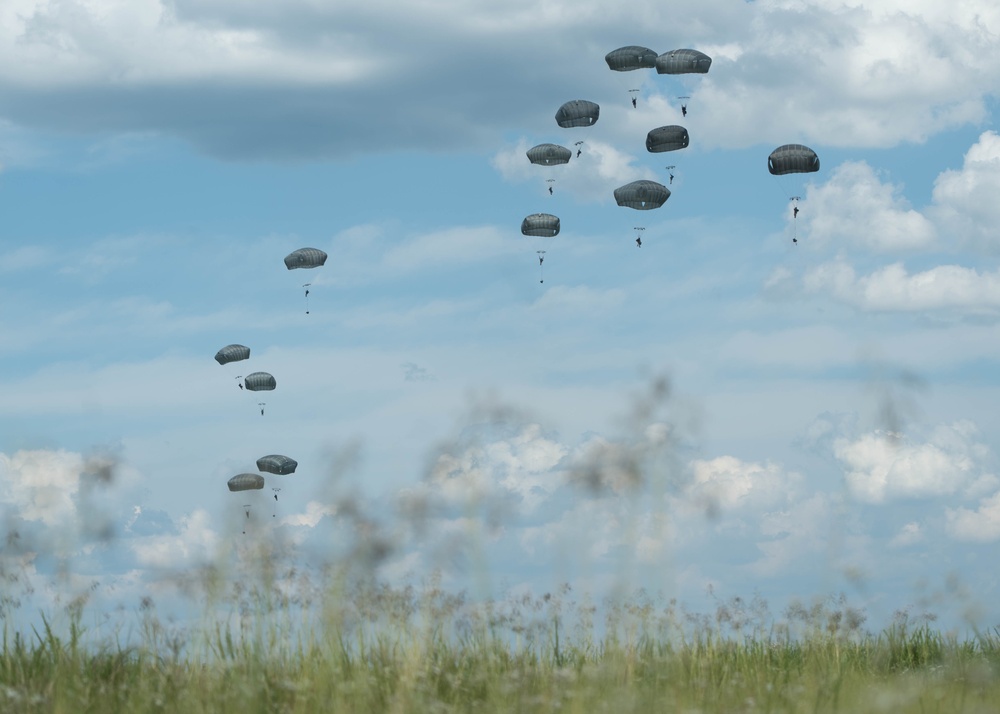
The Washington Post reported this week that elements of the 82nd Airborne, roughly 3,000 paratroopers, have been ordered to the Middle East. Two Marine Expeditionary Units are en route. Axios described planning for a "massive final blow" centered on Kharg. The logic writes itself: seize the island, use it as leverage to force Tehran to reopen Hormuz, declare victory.
The logic also writes its own sequel, and the sequel is ugly.
The Foundation for Defense of Democracies, which is not an institution inclined toward softness on Iran, published a striking analysis calling a Kharg seizure "a trap of America's own making." Analysts Ryan Brobst and Cameron McMillan laid out the geography. Kharg sits 350 miles past the Strait of Hormuz, deep inside the Persian Gulf, just 20 miles from the Iranian mainland. Any American garrison there would face continuous threat from shore-based anti-ship missiles, drones, fast attack boats, and mines. Sustaining it would require permanent naval escort and air cover. The supply line would run the length of the Gulf, under Iranian eyes the entire way.
Seizing Kharg is the easy part. Holding it is where the forever war begins.
CNN reported that U.S. intelligence has observed Iran moving additional military personnel and air defense systems onto the island in recent weeks. Tehran expects this operation and intends to bleed it. A garrison scenario would convert a four-week air campaign into an open-ended ground commitment on a small island 20 miles from a hostile shore, supplied by a sea lane that runs past hundreds of miles of Iranian coastline.
This is the geography that matters. Not the PowerPoint slides in the Pentagon briefing room, where arrows point at Kharg and the word "leverage" appears in bold. The actual terrain. The water. The range fans of Iranian coastal defense missiles. The mine-laying capability of the IRGC Navy's small craft, which do not need to survive to do their damage. A mine costs a few thousand dollars. A minesweeper costs hundreds of millions. The math of asymmetric warfare has not changed since the Tanker War of the 1980s, and neither has the Persian Gulf.
The Second Front
On Saturday, Yemen's Houthi movement fired ballistic missiles at southern Israel. Both were intercepted. No casualties. But the Houthis sit on the Bab el-Mandeb strait, the southern chokepoint between the Red Sea and the Indian Ocean. They spent 2024 and 2025 proving they could shut down commercial shipping there. Their entry into this war means the United States now faces potential disruption at both of the world's most critical maritime chokepoints simultaneously.
This is precisely the scenario that Iranian asymmetric doctrine was designed to produce. Tehran cannot match American firepower head-on. Its strategy has always been to impose costs through proxies and geographic dispersion, stretching American resources across multiple theaters until the political will to continue erodes. It is the same strategic concept the Viet Cong employed, the same concept the Afghan mujahedeen used against the Soviets, the same concept Iraqi insurgents wielded against the U.S. occupation. The strong power wins every battle and loses the war by exhaustion.
The Houthi escalation also poisons the diplomatic well. Any ceasefire between Washington and Tehran would need to cover proxy forces. The Houthis have historically shown limited interest in following Iranian instructions when it conflicts with their own agenda. They are not a subsidiary. They are a franchise.
Alone
German Chancellor Friedrich Merz this week: "I'm just not convinced that what's happening now, what Israel and America are doing, will actually lead to success." NATO, he added, is "a defensive alliance, not an interventionist one" and has "no business being involved here."
European allies have declined to extend their Red Sea naval mission to Hormuz. Britain insists it "will not be drawn into the wider war." Trump warned the Europeans they face "a very bad future" if they will not help secure their own energy supply lines.
He has a point about free-riding. He has had that point for years. But when not a single major ally volunteers to participate, the correct interpretation is not that allies are ungrateful. It is that they have looked at the operation and concluded it has no strategy. When your closest partners will not join, that is not a messaging failure. It is a planning failure.
The 15-Point Fantasy
The administration's peace proposal, delivered through Pakistan on March 24, reads like a demand for unconditional surrender. Dismantle the nuclear program. End all enrichment. Surrender the stockpile. Accept full IAEA access. Cap missile capability. Abandon all proxies. Guarantee freedom of navigation through Hormuz.
Tehran rejected it in 24 hours and countered with five points of its own: war reparations, sovereignty over Hormuz, guarantees against future military action. Foreign Minister Abbas Araghchi: "At present, our policy is the continuation of resistance. We do not intend to negotiate."
Neither document is a serious basis for talks. The American terms require a degree of strategic humiliation that no government will accept while it can still fight. The Iranian terms are fantasy. What is absent is any sign that either side has identified a realistic off-ramp. Diplomacy requires both parties to want an outcome more than they want to keep fighting. That condition does not currently exist.
The Opportunity Cost
Meanwhile, the Pentagon is considering diverting weapons originally earmarked for Ukraine, including Patriot and THAAD interceptors purchased through a NATO initiative. Congress has been notified of plans to redirect roughly $750 million in equipment away from Kyiv.
Every Patriot battery defending a Saudi airbase is a Patriot battery not defending Ukraine, and every THAAD system deployed to the Gulf is a THAAD system not available for the Indo-Pacific theater. Georgetown's Journal of International Affairs published an analysis this week documenting the tradeoff in detail, with the authors arguing that the Iran war has begun consuming the munitions, the planning attention, and the strategic bandwidth that the most recent National Defense Strategy had identified as reserved for great-power competition with Russia and China.
Tell Me How This Ends
The Dallas Federal Reserve estimates that a continued Hormuz closure through the second quarter would push oil to $98 per barrel and shave nearly three percentage points off global GDP growth. Oil executives have identified mid-April as the point beyond which supply disruptions become structurally damaging, baked into contracts, reshaping trade flows, forcing permanent adjustments.
General David Petraeus framed the defining question of the Iraq War in 2003 with a single line, "Tell me how this ends." Twenty-three years later, with paratroopers loading onto transport aircraft at Pope Field and Houthi missiles arcing toward Israel from Yemen, the same question is one that members of Congress in both parties have begun pressing the Pentagon to answer in the closed sessions that have been scheduled for this week.
The original strategic premise of the air campaign, as articulated by the administration in the 48-hour authorization period in March, was that the strikes would be limited in duration and would conclude with the destruction of Iran's nuclear infrastructure and the imposition of terms acceptable to the United States and Israel. The campaign has now extended to 29 days, the targeting list has expanded twice, and the proposed Kharg Island operation would mark the introduction of American ground combat troops into Iranian territory for the first time in any phase of the conflict.
Senator Tim Kaine, in a Senate Foreign Relations Committee hearing Tuesday, asked Defense Secretary Pete Hegseth what Hegseth described as "a fair question I cannot fully answer in this setting," which was the question of what victory in the conflict would specifically look like and what the indicators would be that the United States had achieved it. Senator Tom Cotton, a Republican supporter of the campaign, told Politico Wednesday that the administration "owes the American people a clear set of objectives that the Kharg operation is supposed to accomplish, and a date by which we expect the operation to conclude." The conditions Cotton described, of a stated objective and a stated end-date, are the conditions that have been historically associated with the kind of decisive operation the administration originally framed and that have not yet been articulated for the operation now under consideration.
Related Stories

Muscat Round 3 Ends Without Framework Agreement
The third round of indirect U.S.-Iran talks ended in Muscat on Friday morning without the framework agreement Witkoff had been seeking. The Iranian delegation departed for Tehran.
May 15, 2026 · 5 min read

U.S. Destroyer Confronts Iranian Fast Boats in Hormuz
The USS Truxtun drove off four Iranian fast boats approaching a Liberian-flagged tanker in the central Strait on Saturday, in the most serious non-kinetic confrontation since the blockade began.
May 9, 2026 · 6 min read

Witkoff Is in Muscat for the Third Round of Iran Talks
Special Envoy Steve Witkoff arrived in Muscat on Sunday morning aboard a commercial Emirates flight from Dubai, joining Iranian Foreign Minister Abbas Araghchi in a city where the Sultan's protocol forbids public confirmation of negotiations until both sides authorize disclosure, and where the substantive work of the third round of indirect U.S.-Iran talks has now begun under conditions that neither government would publicly acknowledge for several days.
May 4, 2026 · 7 min read