Iran Promises 'Crushing' Escalation as Markets Reel and Oil Passes $105
Tehran's military vows broader, more destructive attacks after Trump's primetime address. The IEA warns April will be far worse than March. With oil supply losses set to double, the war's economic toll may soon exceed its military one.
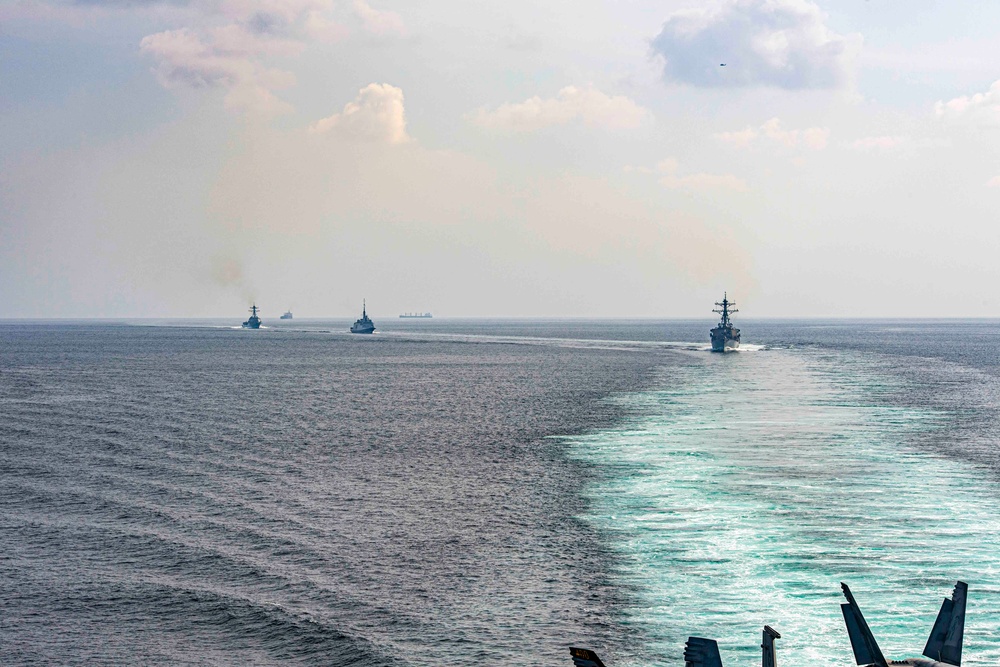
Iran's military command promised "crushing, broader and destructive" retaliation on Wednesday, its most bellicose statement since the war began. The night before, President Trump had warned Iran that continued resistance meant the United States would bomb the country "back to the stone ages." Both sides are now speaking in the grammar of total war. The markets heard them, and sold.
Dow futures dropped 670 points overnight. The S&P fell 1.6 percent. The Nasdaq, heavy with companies whose supply chains stretch across oceans, lost 2.1 percent. Brent crude blew past $105.
These are not panic numbers. Panic comes and goes. This is something quieter and more damaging: the market repricing the global economy around a war that has no visible endpoint.
The IEA's Verdict
The week's most important data did not come from Tehran or Wall Street. It came from the International Energy Agency, which released an assessment Tuesday warning that April will be "much worse than March."
The agency estimates that supply losses, currently 4.5 to 5 million barrels per day from the Hormuz closure and the degradation of Iranian export infrastructure, will roughly double to 10 million barrels per day by mid-April.
Put that number in context. Global production runs about 100 million barrels daily. A sustained loss of 10 percent has no precedent in modern energy markets. The 1973 Arab embargo pulled about 5 million barrels. The Iranian Revolution removed 3.5 million. Neither lasted as long as this war already has.
Several major banks have begun modeling scenarios where oil reaches $150 to $200 a barrel if Hormuz stays shut through April. At those levels, the damage cascades in every direction simultaneously: petrochemical feedstocks, shipping costs, fertilizer prices, airline operations, manufacturing inputs. It is not a recession in the familiar sense. It is a supply shock that central banks cannot fix with interest rate adjustments, because the problem is not demand. The problem is that the oil is not moving.
The Pump
American gasoline is up 35 percent since the shooting started. North of $4 a gallon nationally, higher in California and the Northeast. For the millions of Americans in exurban and rural communities who drive 30, 40, 50 miles to work, this is not a number on a screen. It is a weekly extraction from the household budget that compounds every seven days and that nobody in Washington seems interested in stopping.
Spreading Damage
Thailand and Australia have reported fuel shortages. Airlines across Southeast Asia are canceling routes. China and South Korea have restricted refined fuel exports to preserve domestic supply, a move that will accelerate shortages in every country that depends on East Asian refined product imports.
This is the phase where the war's consequences begin generating their own politics, detached from anything happening on the battlefield. Bangkok, Canberra, Seoul, and Beijing are not calibrating their energy policies to the strategic merits of the Iran campaign. They are reacting to domestic pressure. And the reactions (export bans, hoarding, rationing) universally make shortages worse.
Lebanon
The battlefield is still expanding. Israel has pushed deeper into southern Lebanon, displacing roughly one-fifth of the population. More than 1,200 people have been killed by Israeli strikes on Lebanese territory since March 2. Hezbollah, degraded but not dead after last year's operations, fired over 50 rockets at northern Israel on Wednesday. The capacity for retaliation persists.
Lebanon is secondary to the main U.S.-Iran confrontation in military terms. Politically it matters enormously, because every new front reinforces the perception in regional capitals and European foreign ministries that this war is growing, not concluding. Each expansion makes the eventual settlement more complicated and more expensive.
Bluster or Warning?
Iran's conventional military is in rough shape. Five weeks of American and Israeli strikes have functionally destroyed its navy, punched holes through its air defense network, and thinned its ballistic missile stockpile. By traditional military metrics, Tehran should be suing for terms.
But traditional metrics miss the point. Iran's capacity to threaten is not symmetrical with its capacity to fight. Its drone program has proven more resilient than prewar assessments suggested. Proxy networks, strained but operational, remain in play. And its ability to shut down commercial shipping through Hormuz requires not military dominance but the capacity to create doubt. One mine. One anti-ship missile fired at a tanker. That is all it takes to keep the insurance underwriters from signing transit policies, and without insurance, the ships do not sail.
This regime has killed approximately 600 to 1,000 Americans since 1979. The 241 Marines in Beirut. The 19 airmen at Khobar Towers. The more than 600 soldiers killed by Iranian-supplied explosively formed penetrators in Iraq. It does not make empty threats. It follows through when cornered, and it is cornered now.
The Narrowing Options
The war has entered its most dangerous period not because Iran is winning, but because the economic bleeding is outpacing the military campaign. At $105 with losses set to double, the administration faces three roads.
First: escalate hard. Seize Kharg Island. Destroy whatever Iranian capability still threatens the strait. Force capitulation. This risks a humanitarian catastrophe that would unify global opinion against Washington, but it offers the possibility of a quick end.
Second: find a diplomatic exit. Back channels, a ceasefire framework, some face-saving arrangement where both sides claim victory. This is what the allies want. It is also the option that leaves Iran's nuclear program recoverable and its proxy networks intact, meaning the next war starts from a worse position.
Third: muddle through. Continue the air campaign at its current pace, absorb the rising economic costs and expanding geography, and hope something breaks. This is the path of least resistance and maximum long-term damage. It is also, historically, the one American administrations tend to choose.
The IEA warning should be taped to every wall in the West Wing. Americans will tolerate an expensive war if it is short. They will tolerate a long war if it is cheap. They will not tolerate one that is both. At $4 a gallon and climbing, the clock on public patience is running faster than the clock on Iranian surrender.
Somebody in Washington needs to decide how this ends. Before the market decides for them.
Related Stories

Muscat Round 3 Ends Without Framework Agreement
The third round of indirect U.S.-Iran talks ended in Muscat on Friday morning without the framework agreement Witkoff had been seeking. The Iranian delegation departed for Tehran.
May 15, 2026 · 5 min read

U.S. Destroyer Confronts Iranian Fast Boats in Hormuz
The USS Truxtun drove off four Iranian fast boats approaching a Liberian-flagged tanker in the central Strait on Saturday, in the most serious non-kinetic confrontation since the blockade began.
May 9, 2026 · 6 min read

Witkoff Is in Muscat for the Third Round of Iran Talks
Special Envoy Steve Witkoff arrived in Muscat on Sunday morning aboard a commercial Emirates flight from Dubai, joining Iranian Foreign Minister Abbas Araghchi in a city where the Sultan's protocol forbids public confirmation of negotiations until both sides authorize disclosure, and where the substantive work of the third round of indirect U.S.-Iran talks has now begun under conditions that neither government would publicly acknowledge for several days.
May 4, 2026 · 7 min read