The Administration Requests $37 Billion for Golden Dome Missile Defense in FY2027 Budget
The budget channels early funding through reconciliation to protect the program from future appropriations fights. Total estimated cost: $185 billion over a decade. The Iran war has made the case for comprehensive missile defense harder to argue against.
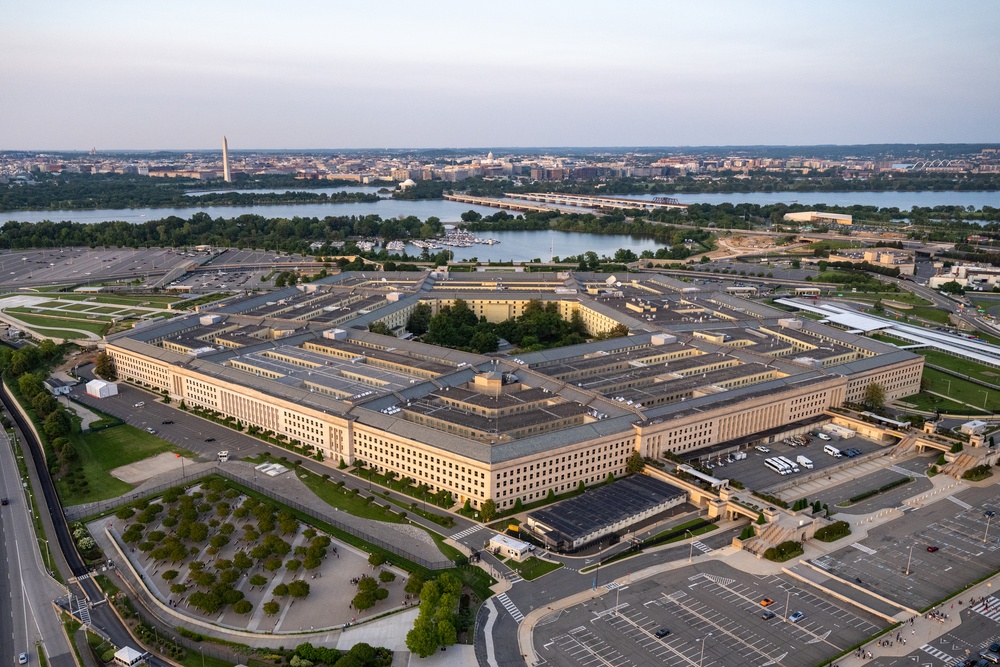
The Trump administration's fiscal year 2027 budget request includes $17.5 billion for Golden Dome, the comprehensive missile defense system designed to protect the continental United States against ballistic missiles, hypersonic weapons, and cruise missiles. The base budget accounts for $400 million; the remaining $17.1 billion comes through reconciliation, adding to the $23 billion secured through last summer's reconciliation bill. Total early investment approaches $39 billion.
Gen. Michael Guetlein, Golden Dome's program manager, told Congress that the full "objective architecture" will cost $185 billion and deliver through the 2035 timeframe. The president initially cited $175 billion and a three-year timeline; the revised estimate reflects expanded scope rather than cost overruns, as the program remains in its design and early procurement phase.
Why Now
The Iran war has provided the most compelling real-world argument for comprehensive missile defense in a generation. Tehran's firing of intermediate-range ballistic missiles at Diego Garcia demonstrated that adversary capabilities are advancing faster than existing point-defense systems can cover. A Navy destroyer intercepted one missile; the other failed in flight. The base survived. The assumption that distance equals safety did not.
North Korea's ICBM program continues to mature, with flight tests demonstrating intercontinental range. China's hypersonic weapons development has outpaced American countermeasures, with the DF-ZF hypersonic glide vehicle entering service and the DF-27 in advanced testing. Russia's Avangard hypersonic system is operationally deployed.
The existing Ground-based Midcourse Defense (GMD) system, based at Fort Greely, Alaska, and Vandenberg Space Force Base, California, was designed to counter a limited North Korean ICBM attack. It was never intended to address the multi-axis threat environment that now exists. Golden Dome is designed to fill that gap by integrating ground-based interceptors, space-based sensors, and potentially space-based interceptor layers into a system capable of detecting and engaging threats from any vector.
The component technologies are not speculative. Patriot, THAAD, Aegis, and Iron Dome have all demonstrated successful intercepts in combat conditions, including during the Iran war. What Golden Dome adds is the integration layer: a sensor-to-shooter architecture that connects these systems into a unified national defense. The engineering challenge is scale and integration, not fundamental physics.
The Reconciliation Structure
The most discussed element of the budget request is not the dollar figure but the funding mechanism. By channeling the majority of early spending through reconciliation rather than annual defense appropriations, the administration has structured Golden Dome to be resistant to the budget cycle that has historically killed or delayed major defense programs.
Reconciliation spending is mandatory rather than discretionary. Once enacted, it does not require annual reauthorization. A future Congress that wanted to redirect Golden Dome funding would need to pass new legislation rather than simply writing a smaller number in an appropriations bill.
The administration has studied how previous missile defense programs were scaled back when political winds shifted. The Strategic Defense Initiative was defunded piecemeal through appropriations. Clinton-era and Obama-era cuts to Ground-based Midcourse Defense followed the same path. The reconciliation structure is a deliberate response to that history: protect the program from the short-term political incentives that have repeatedly disrupted long-term defense investments.
Critics, including some fiscal conservatives, argue that this circumvents Congress's power of the purse. The counterargument is that missile defense is a generational investment that cannot be built in two-year appropriations cycles. Aircraft carriers take seven years to build. Nuclear submarines take longer. A national missile defense architecture that requires space-based sensors, new interceptor fields, and integrated command networks will take a decade. Subjecting each phase to annual political negotiation guarantees delay, cost increases, and capability gaps.
The Cost Question
Defense programs have a documented history of exceeding initial cost estimates. The F-35 program was projected at $233 billion and currently exceeds $400 billion. The Zumwalt-class destroyer was estimated at $1.3 billion per hull and delivered at over $7.5 billion. Golden Dome's revision from $175 billion to $185 billion before entering full production is modest by comparison, but it will not be the last revision.
The relevant question is not whether the program will cost more than projected. It will. Every major weapons system does. The relevant question is whether a comprehensive missile defense is worth the investment at any realistic price. The Iran war, North Korean ICBM development, Chinese hypersonic deployments, and Russian nuclear modernization all point in the same direction: the threat is real, it is growing, and the existing patchwork of point-defense systems is not adequate to meet it.
What Congress Should Watch
The budget request deserves scrutiny on specifics rather than reflexive opposition. Three areas warrant close attention.
First, testing milestones. The Missile Defense Agency should demonstrate integrated sensor-to-shooter capability against representative threats before the bulk of procurement funding is released. Buy-before-you-test produces the kind of concurrency problems that plagued the F-35.
Second, industrial base capacity. The defense industrial base is already strained by the Iran war's munitions consumption, ongoing Patriot and THAAD production for allies, and Navy shipbuilding demands. Adding a $185 billion missile defense program without expanding production capacity risks bottlenecks that delay every program simultaneously.
Third, space-based interceptors. The most technically ambitious and expensive component of Golden Dome is the space layer. Ground-based and sea-based interceptors use proven technology at proven scale. Space-based interceptors do not. Congress should fund the research aggressively and gate the procurement on demonstrated results.
Golden Dome is the most significant investment in homeland missile defense since the original GMD deployment. The threat environment justifies it. The funding structure reflects lessons learned from past programs that died on the appropriations floor. The details will determine whether it delivers.
Related Stories

Muscat Round 3 Ends Without Framework Agreement
The third round of indirect U.S.-Iran talks ended in Muscat on Friday morning without the framework agreement Witkoff had been seeking. The Iranian delegation departed for Tehran.
May 15, 2026 · 5 min read

U.S. Destroyer Confronts Iranian Fast Boats in Hormuz
The USS Truxtun drove off four Iranian fast boats approaching a Liberian-flagged tanker in the central Strait on Saturday, in the most serious non-kinetic confrontation since the blockade began.
May 9, 2026 · 6 min read

Witkoff Is in Muscat for the Third Round of Iran Talks
Special Envoy Steve Witkoff arrived in Muscat on Sunday morning aboard a commercial Emirates flight from Dubai, joining Iranian Foreign Minister Abbas Araghchi in a city where the Sultan's protocol forbids public confirmation of negotiations until both sides authorize disclosure, and where the substantive work of the third round of indirect U.S.-Iran talks has now begun under conditions that neither government would publicly acknowledge for several days.
May 4, 2026 · 7 min read